



Big Data Testing: Complete Strategy, Automation Tools & Tutorial [2026]
Master big data testing with proven strategies, automation testing tools for big data, and ETL validation techniques. This comprehensive big data testing tutorial covers frameworks, tools, and best practices for testing big data applications at enterprise scale.
Table of Contents
- What is Big Data Testing?
- Big Data Testing Strategy
- Big Data Testing vs ETL Testing
- Big Data Automation Testing
- Big Data Testing Tools
- Big Data Migration Testing
- Big Data Monitoring
- Big Data Testing Challenges
- Big Data QA: Roles and Responsibilities
- Best Practices for Big Data Testing
- Conclusion
- FAQs
Table of Contents
- What is Big Data Testing?
- Big Data Testing Strategy
- Big Data Testing vs ETL Testing
- Big Data Automation Testing
- Big Data Testing Tools
- Big Data Migration Testing
- Big Data Monitoring
- Big Data Testing Challenges
- Big Data QA: Roles and Responsibilities
- Best Practices for Big Data Testing
- Conclusion
- FAQs
Organizations today process petabytes of data daily across distributed systems, data lakes, and cloud warehouses. Yet traditional big data software testing approaches simply cannot keep pace with the volume, velocity, and variety of modern data environments. The result?
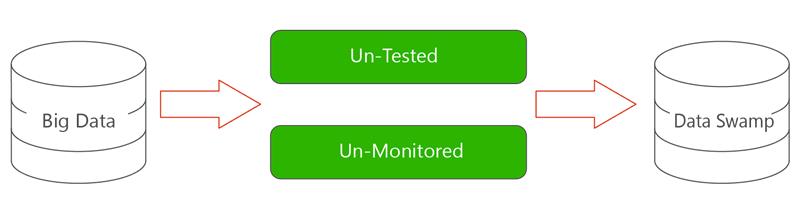
The Data Swamp Problem: As a result, many organizations lack the resources or commitment to properly verify the incoming data. Frequently, data is simply dumped into big data environments without testing or monitoring.
Silent data failures that cascade into flawed analytics, compliance violations, and costly business decisions.
This guide serves as your complete big data testing tutorial-covering everything from foundational concepts to advanced big data automation testing frameworks and tool selection for testing big data projects successfully.
What is Big Data Testing?
Big data testing is a specialized form of big data software testing that validates the accuracy, completeness, performance, and reliability of large-scale data processing systems. Unlike conventional application testing, testing big data must validate not just processing logic, but also the integrity of massive datasets as they flow through complex pipelines.
The fundamental difference between testing in big data environments and traditional testing lies in scale and complexity. While conventional testing might validate thousands of records, testing big data applications must handle billions of records across distributed systems.
Let’s understand the characteristics of big data which create challenges in testing.
Big Data Characteristics
Understanding big data characteristics is essential for effective testing. The defining attributes create unique challenges that traditional testing approaches cannot address.
Dimensions of Big Data – 5Vs
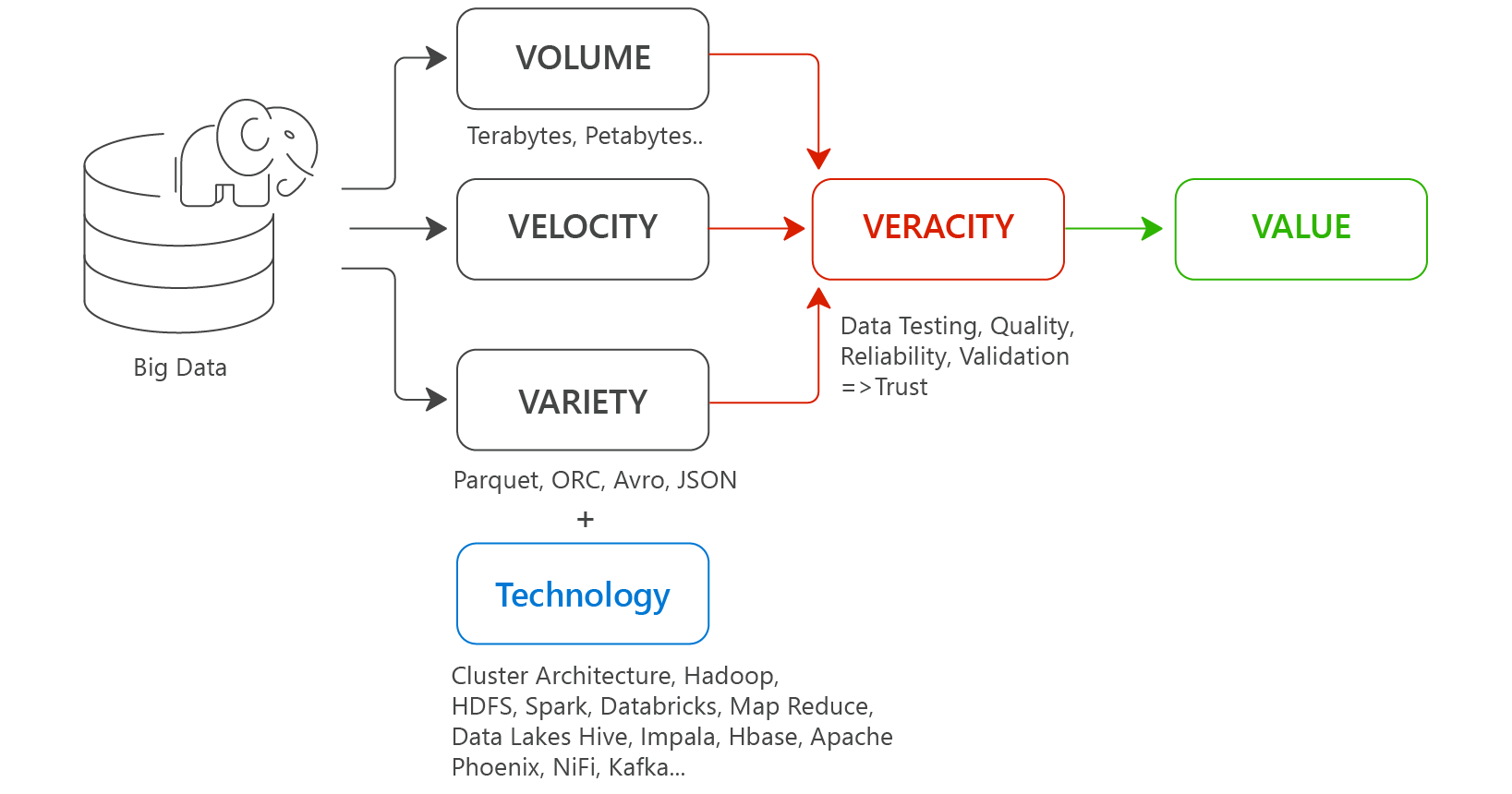
The dimensions of big data-commonly known as the V’s-define what makes big data testing uniquely challenging:
- Volume: Billions of records across distributed storage systems like HDFS, S3, or Azure Data Lake.
- Variety: Structured, semi-structured, and unstructured data including JSON, Parquet, Avro, XML, and raw text.
- Velocity: Data quality verification across heterogeneous sources (big data veracity is a measure of the accuracy, completeness, and currency of the data).
- Value: Ensuring processed data delivers business insights worth the processing investment.
Big Data Testing Strategy
A comprehensive big data testing strategy divides the data lifecycle into distinct validation stages. These big data testing strategies ensure complete coverage across your data ecosystem from source to consumption.
Big Data Validity
Big data validity refers to ensuring data conforms to defined formats, types, ranges, and business rules. In schema-on-read environments like data lakes, validity testing becomes critical because invalid data can be stored without immediate detection, only causing failures when consumed by downstream analytics.
Big Data Testing Techniques
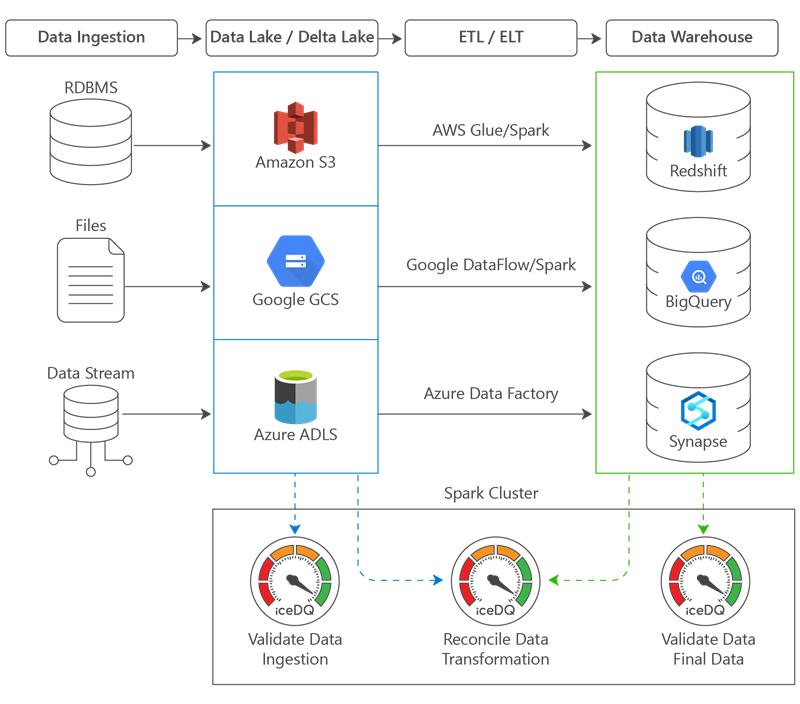
Effective big data testing techniques span the entire data pipeline:
- Pre-Ingestion Validation: Source system connectivity, schema validation, file format verification, and data profiling.
- Processing Reconciliation: Transformation logic, business rules, data type conversions, and aggregation accuracy.
- Post-Load Validation: Source-to-target reconciliation, completeness verification, and referential integrity.
Big Data ETL Testing
Big data ETL testing (also known as ETL big data testing) focuses on validating the Extract, Transform, and Load processes that form the backbone of data pipelines. This is where most data defects originate, making ETL processing in big data environments a critical validation focus.
Key big data ETL testing activities:
- Transformation logic verification against mapping specifications
- Business rule validation (calculations, derivations, conditional logic)
- Data type conversions and precision handling across big data ETL testing
- Join integrity testing (orphaned records, duplicate matches)
- Incremental load logic (CDC, merge operations, upserts)
Big Data Database Testing
Database & big data testing validates data storage, retrieval, and query accuracy across distributed database systems. This includes testing NoSQL databases, columnar stores, and traditional databases integrated with big data platforms. Key areas include schema validation, query performance, and data persistence verification.
Big Data Testing vs ETL Testing
Understanding big data testing vs ETL testing is crucial for selecting the right approach. While often used interchangeably, they have important distinctions:
| Aspect | ETL Testing | Big Data Testing |
| Scope | Extract, Transform, Load processes | Entire data ecosystem |
| Data Volume | Millions of records | Billions to trillions of records |
| Data Types | Primarily structured | Structured, semi-structured, unstructured |
| Processing | Batch-oriented | Batch, streaming, real-time |
| Infrastructure | Traditional ETL tools | Distributed systems (Hadoop, Spark, cloud) |
| Tools | ETL-specific testing tools | Big data testing tools with connectors |
In practice, big data testing encompasses ETL testing as a subset while extending validation across the entire data ecosystem including data lakes, streaming platforms, and analytics layers.
Big Data Automation Testing
Big data automation testing is essential because manual testing cannot scale with big data volumes. Big data testing automation enables continuous validation of billions of records without human intervention, making it possible to automate big data testing across your entire pipeline.
Big Data Automation Testing Framework
A robust big data automation testing framework combines architecture, processes, and tools to enable big data test automation at scale. Key components include:
- Test Case Repository: Centralized storage for reusable test rules and validation logic.
- Connectivity Layer: Big data connectors to databases, cloud platforms, APIs, and file systems.
- Execution Engine: High-performance processing for comparing large datasets.
- Scheduling & Orchestration: Integration with CI/CD pipelines and job schedulers.
- Results Management: Exception tracking with drill-down capabilities.
- Alerting & Integration: Notifications and incident management integration.
Big Data Test Automation Tools
Selecting the right big data test automation tools requires evaluating connectivity, scalability, and integration capabilities. Unlike general-purpose testing tools, big data automation tools must handle distributed processing, multiple data formats, and petabyte-scale volumes.
Automate Big Data Testing: Implementation Guide
To successfully automate big data testing, follow these implementation steps:
- Assess Current State: Inventory existing manual tests and identify automation candidates.
- Select Big Data Automation Platform: Choose tools that match your technology stack and scale requirements.
- Define Test Standards: Establish naming conventions, rule templates, and quality thresholds.
- Build Connectivity: Configure big data connectors to all source and target systems.
- Implement CI / CD Integration: Connect automation to deployment pipelines.
- Monitor and Optimize: Track automation coverage and continuously improve.
Big Data Automation Testing Tools: Open-Source Options
For organizations exploring open-source big data automation testing tools, options include Great Expectations (Python-based data validation), Deequ (Spark-native data quality), and Apache Griffin. However, open-source tools often lack enterprise features like comprehensive big data connectors, visual interfaces, and production-grade support that commercial solutions provide.
Big Data Testing Tools
Selecting the right big data testing tool (or big data testing tools for enterprise deployments) requires evaluating several critical capabilities that distinguish effective testing tools for big data from general-purpose solutions.
Automation Testing Tools for Big Data
The best automation testing tools for big data share these essential capabilities:
- Broad Connectivity: Support for 100+ data sources including cloud warehouses, traditional databases, and file formats.
- Scalable Processing: In-memory engines or distributed processing (Spark) for handling billions of records.
- Low-Code Interface: Visual test creation for business users without requiring extensive coding.
- Flexible Rule Types: Support for reconciliation, validation, checksum, and custom scripting.
- DevOps Integration: APIs and plugins for CI / CD pipeline integration.
- Exception Management: Drill-down to record-level exceptions with workflow capabilities.
Big Data Testing Solution Criteria
When evaluating a big data testing solution, consider:
- Scale: Can the solution handle your current and projected data volumes?
- Connectivity: Does it support all your data sources via native big data connector integration?
- Usability: Can both technical and business users create and maintain tests?
- Integration: Does it fit your DevOps toolchain and workflow systems?
- Support: What level of big data testing services and support is available?
Big Data Connectors
Big data connectors form the foundation of any testing solution. Without comprehensive big data connector support, teams waste time building custom integrations. Enterprise big data testing tools should include native connectors for:
- Cloud Data Warehouses: Snowflake, Databricks, BigQuery, Redshift, Synapse.
- Traditional Databases: Oracle, SQL Server, PostgreSQL, MySQL, DB2.
- Big Data Platforms: Hadoop, Hive, Spark, Kafka.
- Cloud Storage: S3, ADLS, GCS with support for Parquet, Avro, JSON, ORC.
- Applications: Salesforce, SAP, REST APIs, and specialized connectors like Oracle big data connectors.
Big Data Testing in iceDQ Tool
iceDQ is a purpose-built big data testing tool designed for enterprise data validation, monitoring, and observability. Key capabilities for big data testing in iceDQ tool include:
- 150+ Native Connectors: Connect to virtually any data source without custom coding.
- Spark-Based Big Data Edition: Scale validation across petabytes using Apache Spark clusters.
- Low-Code Interface: Visual rule builder for business users and analysts.
- Comprehensive Rule Types: Checksums, reconciliation, validation, and custom Groovy scripting.
- DevOps Integration: Jenkins plugins, REST APIs, Jira, ServiceNow connectivity.
Big Data Testing Using Selenium: Why It Doesn’t Work
A common question is whether big data testing using Selenium is viable. The short answer: No. Selenium automates browser-based UI testing, not data validation. Big data testing requires comparing datasets, validating transformations, and verifying data integrity-none of which Selenium is designed to do. Purpose-built big data testing tools are essential for effective data validation.
Big Data Migration Testing
Big data migration testing ensures data integrity when moving between platforms-whether migrating from on-premises to cloud, between cloud providers, or modernizing legacy systems. Big data migration projects carry significant risk without comprehensive validation.
Big Data Migration Validation
Big data migration validation encompasses:
- Record Count Reconciliation: Verify all records migrated without loss or duplication.
- Data Integrity Checks: Confirm values match between source and target systems.
- Schema Validation: Ensure data types, constraints, and structures are preserved.
- Transformation Verification: Validate any data transformations applied during migration.
- Historical Data Preservation: Confirm historical records and audit trails are intact.
Compare Data Migration Solutions for Big Data Projects
When you compare data migration solutions for big data projects, evaluate their testing capabilities alongside migration features. The best solutions include built-in validation, automated reconciliation, and rollback support to ensure successful big data migration.
Big Data Monitoring
Big data monitoring extends testing into production environments, providing continuous validation of data pipelines and quality metrics. While testing certifies data before deployment, big data monitor capabilities ensure ongoing reliability.
Big Data Monitoring Tools
Effective big data monitoring tools provide:
- Continuous Validation: Automated checks running with every data load.
- Threshold Alerting: Notifications when quality metrics breach acceptable ranges.
- Trend Analysis: Historical tracking to identify degradation patterns.
- Integration: Connection to incident management and alerting systems.
Big Data Observability
Big data observability goes beyond monitoring to provide deep visibility into data pipeline health. Using AI and machine learning, observability platforms automatically detect anomalies, identify root causes, and predict potential issues before they impact business operations.
Big Data Testing Challenges
Successfully implementing big data testing requires overcoming several significant big data testing challenges:
Scale and Volume Challenges
Testing billions of records requires specialized infrastructure and techniques. Traditional tools cannot do row-by-row comparison as they are computationally infeasible at petabyte scale. Solutions require parallel processing engines, intelligent sampling, and aggregate validations.
Big Data Failure Case Studies
Big data failure case studies reveal common patterns: silent data corruption undetected for weeks, transformation bugs affecting millions of records, and migration failures causing significant business disruption. These failures underscore the critical importance of comprehensive testing.
Environment and Infrastructure Challenges
Testing environments often differ significantly from production in cluster size, data volumes, and configurations. Tests passing in development may fail at production scale, making representative test data and scalable tools essential.
Big Data QA: Roles and Responsibilities
Effective big data QA requires clear roles and responsibilities across the data team.
Big Data Tester Responsibilities
A big data testers’ (or big data testing) roles and responsibilities typically include:
- Developing and maintaining test cases for data pipelines and transformations
- Creating and executing data validation rules
- Analyzing test results and investigating data anomalies
- Collaborating with data engineers on defect resolution
- Maintaining test automation frameworks and expanding coverage
Big Data Testing Services
Organizations lacking internal expertise may engage a big data testing company for specialized big data testing services. These services range from tool implementation and training to fully managed testing operations. When evaluating providers, assess their experience with your technology stack and industry.
Best Practices for Big Data Testing
Based on enterprise implementations across industries, these best practices for big data testing consistently deliver successful outcomes:
Testing Big Data Applications
When testing big data applications, follow these practices:
- Test Early and Continuously: Validate data at the source, not just the destination.
- Automate Everything Repeatable: Manual testing cannot scale with big data volumes.
- Validate Complete Datasets: Sampling can miss critical edge case defects.
- Implement Multiple Validation Layers: Combine reconciliation, validation, and profiling.
- Track Metrics and Trends: Monitor quality over time to identify degradation.
Testing Big Data Projects
For testing big data projects successfully:
- Integrate Business Users: Data quality is a business concern-involve domain experts.
- Document and Version Control: Treat test cases as code artifacts.
- Establish Quality Gates: Block deployments when tests fail.
- Plan for Scale: Design testing infrastructure that grows with data volumes.
Conclusion
Big data testing is no longer optional for organizations that depend on big data analytics for competitive advantage. The complexity of modern data ecosystems-spanning multiple clouds, real-time streams, and petabyte-scale volumes-demands specialized big data testing strategies, big data automation testing frameworks, and purpose-built big data testing tools.
By implementing comprehensive testing across the data lifecycle, leveraging automation, and selecting tools designed for big data scale, organizations achieve the data reliability required for trustworthy analytics and compliant operations.
The investment in big data testing pays dividends through reduced data defects, faster time-to-insight, and the confidence that business decisions rest on a foundation of validated, high-quality data.


FAQs
What is the main problem with big data testing?
The large volume of data is the key problem with big data testing.
How does iceDQ overcomes big data volume?
While most data testing tools database for processing, iceDQ has cluster-based processing hence it can scale linearly without size limit.
Does iceDQ support complex data files and format?
Yes. iceDQ supports have prebuilt connectors to various file formats such as CSV, JSON, Parquet, Avro, ORC, and many more.
Does iceDQ connect to various data lake storage?
Yes. iceDQ connects to different cloud storage such as GCS, S3, ADLS Gen2.
About the author



Sandesh Gawande is the Founder and CEO of iceDQ, a unified Data Reliability Platform for automated data testing, monitoring, and observability. With over 25 years of experience in data engineering and architecture, Sandesh has led large-scale data initiatives for Fortune 500 companies across banking, insurance, and healthcare, including Deutsche Bank, JPMorgan Chase, and MetLife.
Know More
CEO and Founder at iceDQ.
First to introduce automated data testing. Advocate for data reliability engineering.
Share this article